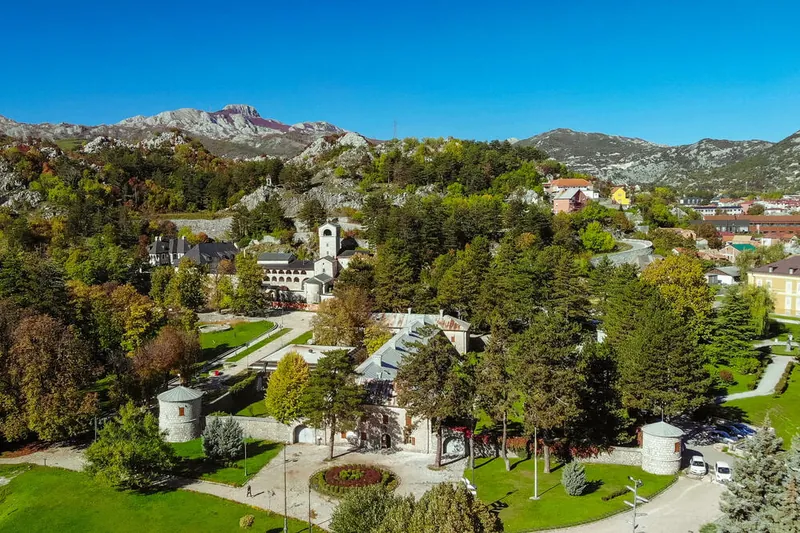


A Cetinje day trip takes you to Montenegro’s old royal capital, a quiet town in a karst valley below Mount Lovćen, about half an hour inland from Budva. It doesn’t look like a capital. The main street is short, the houses are low, and cows still graze at the edge of town. Yet this was where Montenegro’s prince-bishops and kings governed for centuries, and where the great powers of Europe kept their embassies.
That history is what makes Cetinje worth the drive. Within a few streets you’ll find a working Orthodox monastery, the palace of the last Montenegrin king, the house where the poet-ruler Njegoš played billiards, and a row of grand former legations built for a country of barely a few hundred thousand people.
Cetinje is about an hour from Tivat Airport and 45 minutes from Podgorica Airport, and it pairs perfectly with Lovćen in a single day.
A short history of Cetinje
Cetinje was founded in the 1480s by Ivan Crnojević, a ruler who retreated into the mountains as the Ottoman Empire advanced, and built a court and a monastery in this remote valley. His family also set up one of the earliest printing presses in the Slavic world, which in 1494 produced the Octoechos, among the first books printed in Cyrillic.
For the next three centuries Montenegro was governed from Cetinje by prince-bishops, church leaders who also led the state, many of them from the Petrović-Njegoš family. The most famous was the poet Petar II Petrović-Njegoš, who in 1838 built a residence here that came to be known as the Biljarda, after the billiard table he had carried up the mountain.
Under Prince Nikola, who came to power in 1860, the state became a secular principality. After the Congress of Berlin recognised Montenegro’s independence in 1878, Russia, France, Britain, Austria-Hungary, Italy and others opened diplomatic missions in Cetinje, and the small town filled with embassies, a theatre and the trappings of a European capital. Nikola declared himself king in 1910.
That world ended with the First World War. In 1918 Montenegro was absorbed into the new Kingdom of Serbs, Croats and Slovenes, and King Nikola died in exile in 1921. The capital later moved to Podgorica, but Cetinje keeps the official title of Old Royal Capital, and the president’s ceremonial residence is still here.
What to see and do in Cetinje
Cetinje Monastery
The monastery, rebuilt several times since Ivan Crnojević’s day, is still the spiritual heart of Montenegrin Orthodoxy. It holds relics that are deeply venerated, among them the relics of St Peter of Cetinje and, according to the church, the right hand of St John the Baptist. Shoulders and knees must be covered; wraps are usually available at the entrance.
King Nikola’s Palace
The modest red-and-white palace of the last king is now a museum, kept much as the royal family left it: furniture, portraits, weapons, decorations and gifts from foreign courts. It gives a vivid sense of how a tiny mountain kingdom presented itself to Europe.
The Biljarda and the relief map
Njegoš’s residence is now a museum about his life and work. In a pavilion beside it lies a huge relief map of Montenegro made by the Austro-Hungarian army during the First World War, an unexpectedly absorbing way to understand the country’s geography before you drive through it.
The old embassies
Walk the quiet streets around the centre and you’ll pass the former legations of the great powers, from the elegant French embassy to the British and Russian ones. Most are now used by cultural institutions, and the walk is a lesson in how much attention Europe once paid to this small state.
The National Museum and the Vlach Church
The former parliament building houses the History Museum and the Art Museum of the National Museum of Montenegro, with a combined ticket for several sites. Nearby, the little Vlach Church has a fence made, it is said, from the barrels of captured Ottoman rifles.
Practical tips for visiting Cetinje
Half a day is enough to see the monastery, the palace and the Biljarda at an unhurried pace. Cetinje sits at around 650 metres, so it is noticeably cooler than the coast, pleasant in midsummer and chilly in winter. It is also one of the rainiest towns in Europe, so carry an umbrella outside summer.
Museum opening hours are shorter outside the main season, and some sites close on certain days of the week. A combined ticket covers several museums. Opening times and prices change, so check before you go.
Dress modestly for the monastery, and bring comfortable shoes: the town centre is small but best seen on foot.
Getting to Cetinje from Tivat and Podgorica airports
| From | Distance | Driving time |
|---|---|---|
| Tivat Airport (TIV) | about 50 km | about 1 h |
| Podgorica Airport (TGD) | about 45 km | about 45 min |
From Tivat Airport the usual route goes via Budva and climbs the mountain road to Cetinje, about 50 km and roughly an hour. An alternative is the more dramatic route up the Kotor serpentine and through Njeguši and Lovćen.
From Podgorica Airport it is about 45 km and around 45 minutes on the main road west towards the coast.
With a private driver you can link Cetinje with Lovćen, Njeguši or Skadar Lake in one relaxed day, stopping wherever you like. The price is fixed in advance, the driver waits between sights, and child seats are available on request. See fixed prices from Tivat Airport or book your trip.
Combine Cetinje with nearby places
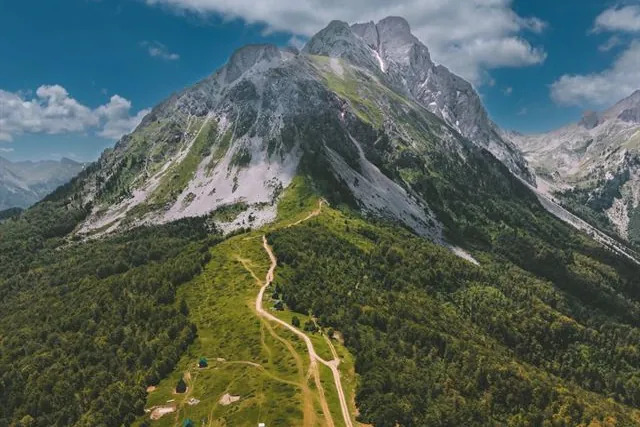
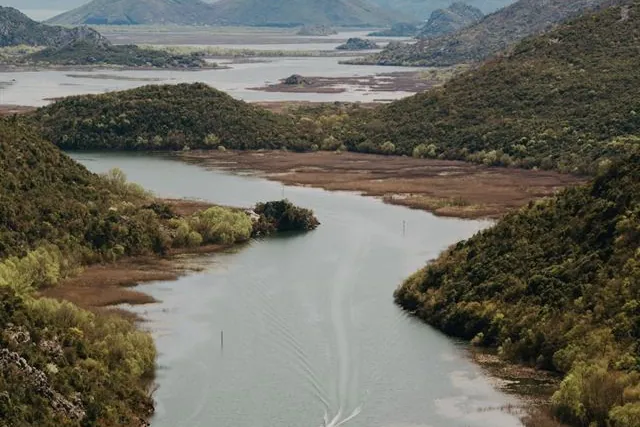
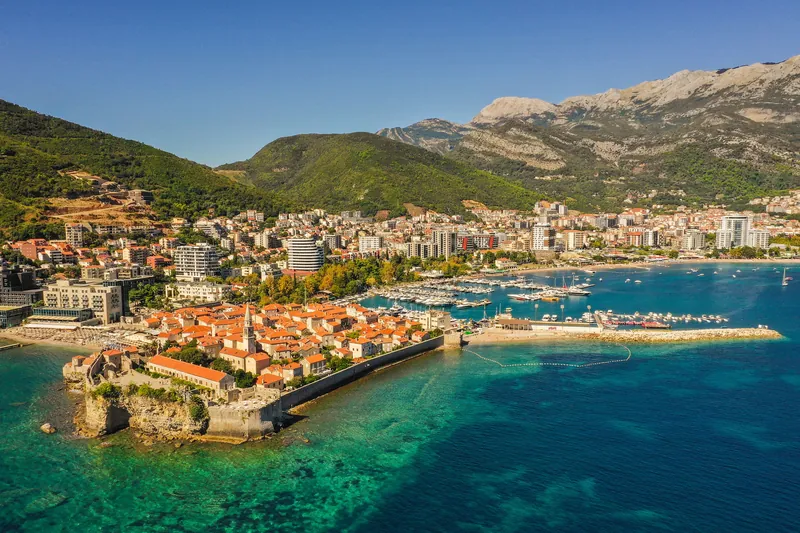
Cetinje is the natural partner of Lovćen and the Njegoš Mausoleum, half an hour above the town. Twenty minutes the other way, the road drops to the river town of Rijeka Crnojevića and Skadar Lake. Or head back to the sea at Budva Old Town.
Questions people ask
Is Cetinje worth visiting?
Yes, if you are interested in history. Cetinje is where Montenegro was ruled for centuries, and its monastery, royal palace, museums and former embassies tell that story better than anywhere else. It is quiet and uncommercial, and the drive up from the coast is beautiful. Combine it with Lovćen for a full day.
How long do you need in Cetinje?
Three to four hours is enough for Cetinje Monastery, King Nikola’s Palace, the Biljarda and a walk past the old embassies. If you plan to see several museums in detail, allow most of the day, or combine a shorter visit with Lovćen or Skadar Lake.
Can you visit Cetinje from Budva?
Yes, easily. Cetinje is about 30 km from Budva, roughly half an hour by car up a winding mountain road. A half-day trip from Budva is very comfortable, and with a driver you can add Lovćen or Rijeka Crnojevića and still be back on the coast for dinner.
What is the dress code at Cetinje Monastery?
Cover your shoulders and knees, and remove hats inside. Women are sometimes asked to wear a skirt, and wraps are usually available at the entrance. Photography may be restricted in parts of the monastery, especially near the relics, so look for signs or ask.