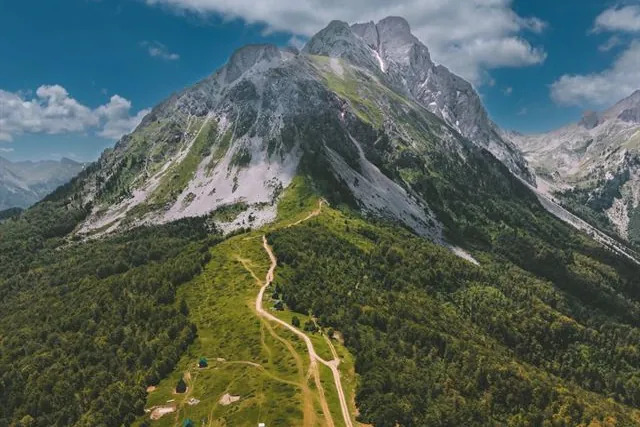


Lovćen National Park covers the grey limestone mountain that rises straight behind Kotor, and the Njegoš Mausoleum sits on one of its summits, Jezerski vrh, at about 1,650 metres. For Montenegrins this is not just a viewpoint. Lovćen gave the country its old name, Crna Gora, the Black Mountain, and the man buried at the top is its national poet.
A trip here combines three things: the drive up, either by the famous hairpin road from Kotor or from Cetinje; lunch in Njeguši, the village known for its smoked ham; and the climb to the mausoleum, where a circular terrace looks out over the Bay of Kotor, the coast and, on a clear day, Skadar Lake.
From Tivat Airport you can be at the top in about an hour and a quarter, which makes Lovćen a satisfying half-day trip or the first half of a day that ends in Cetinje.
Njegoš and the story of Lovćen
Petar II Petrović-Njegoš was born in Njeguši in 1813 and became ruler of Montenegro as a teenager, in 1830. In those days the country was led by a prince-bishop, at once head of the Orthodox Church and of the state. Njegoš modernised the government, fought the Ottoman Empire and its local governors, and wrote poetry that is still learned by heart in the region. His best-known work, The Mountain Wreath, was published in 1847.
He asked to be buried on Lovćen and built a small chapel on Jezerski vrh in his lifetime. He died of tuberculosis in 1851, aged only 37, and his remains were later carried up the mountain to the chapel. During the First World War the chapel was damaged, and it was rebuilt in the 1920s.
In the 1970s Yugoslavia replaced the chapel with the mausoleum you see today, designed by the Croatian sculptor Ivan Meštrović and completed in 1974. The decision was controversial, and some people still argue that the chapel should have stayed. Either way, the building is a striking piece of 20th-century design, and the setting is extraordinary.
Lovćen was declared a national park in 1952. Its rock, forest and high meadows sit at the meeting point of the mild coastal climate and the harsher mountain one, which is why you can leave a hot beach in Kotor and arrive in cool, pine-scented air an hour later.
What to see and do on Lovćen
The Njegoš Mausoleum
From the car park, a covered stairway of 461 steps climbs through a tunnel in the rock to the summit. At the entrance two granite caryatids in traditional dress guard the door; inside, a monumental statue of Njegoš sits beneath an eagle in a gilded hall, and his tomb lies in the crypt below. Behind the building, a narrow path leads to a circular viewing platform at the very edge of the summit. There is an entry fee; check the current price before you go.
The view from Jezerski vrh
On a clear day the panorama takes in the Bay of Kotor, the coast around Budva, the karst fields towards Cetinje and the distant gleam of Skadar Lake. Mornings tend to be clearest; by afternoon in summer cloud often builds on the peaks.
Njeguši and its smoked ham
The village of Njeguši, in a high karst valley on the way up, was the home of the Petrović-Njegoš dynasty. Today it is best known for njeguški pršut, a dry-cured smoked ham, and for its sharp local cheese. Several family taverns serve a platter with homemade bread, and it is the natural lunch stop on this route.
The Kotor serpentine road
The old road from Kotor to Njeguši climbs the mountainside in a long series of hairpin bends, with ever-wider views over the bay at every turn. It is narrow, with places where two cars can only just pass, and the drive is far more enjoyable when someone else is at the wheel.
Ivanova Korita
This forested plateau below the summit has a visitor centre, walking trails and, in summer, an adventure park with rope courses for children and adults. It is a pleasant place to stretch your legs on the way up or down.
Practical tips for visiting Lovćen
Allow half a day from Kotor or Tivat, or a full day if you combine Lovćen with Cetinje. Late spring to mid-autumn is the main season. In winter the summit road can be closed by snow, and even in summer it is several degrees cooler than on the coast, so bring a layer.
The 461 steps are steady rather than steep, but there is no lift, so take your time. The mausoleum is a memorial: respectful behaviour is expected. National park and mausoleum fees and opening hours change from year to year, so check before you go.
If you suffer from car sickness, ask your driver to go up via Cetinje and down via the serpentine, or the other way round. The Cetinje road is wider and gentler.
Getting to Lovćen from Tivat and Podgorica airports
| From | Distance | Driving time |
|---|---|---|
| Tivat Airport (TIV) | about 45 km | about 1 h 15 |
| Podgorica Airport (TGD) | about 65 km | about 1 h 15 |
From Tivat Airport the most scenic route runs through Kotor and up the serpentine road to Njeguši, then on to the mausoleum: about 45 km and roughly 1 hour 15 minutes, depending on traffic on the bends.
From Podgorica Airport you drive via Cetinje and climb into the national park from the east, about 65 km and roughly 1 hour 15 minutes.
These are mountain roads with tight bends and few places to stop, which is exactly why a private driver makes sense here. You look at the view while your driver handles the hairpins, waits at the car park while you climb, and stops in Njeguši for lunch. The price is fixed in advance, and child seats are available. See fixed prices from Tivat Airport or book your trip.
Combine Lovćen with nearby places
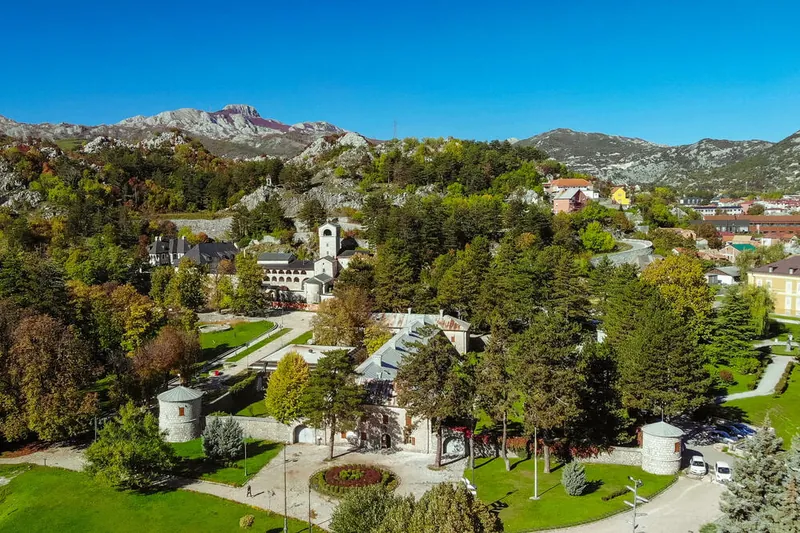
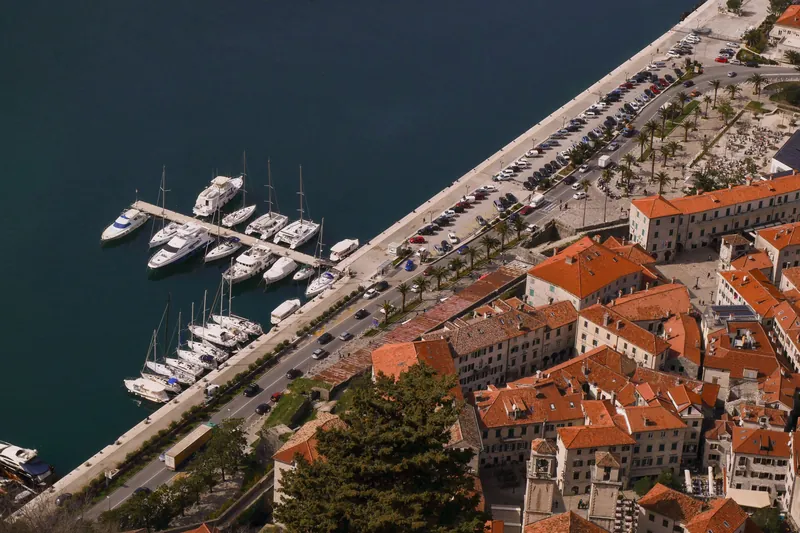
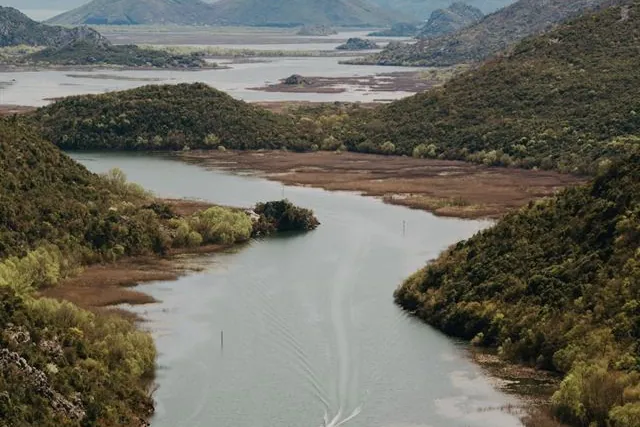
The classic full day goes up from Kotor Old Town by the serpentine, stops in Njeguši and at the mausoleum, then continues down to Cetinje, the old royal capital. With an early start you can carry on to Rijeka Crnojevića and Skadar Lake before heading back to the coast.
Questions people ask
How many steps are there to the Njegoš Mausoleum?
There are 461 steps from the car park to the mausoleum, most of them inside a covered stairway cut into the rock, so you are protected from sun and wind. The climb is steady rather than steep and takes most people 10 to 15 minutes at an easy pace. There is no lift.
Can you visit Lovćen from Kotor?
Yes. Lovćen is directly above Kotor, and the serpentine road takes you to Njeguši and on to the mausoleum in roughly an hour. A half-day trip from Kotor is very comfortable, and adding Cetinje on the way back makes a full and varied day.
Is the Kotor serpentine road dangerous?
It is not dangerous for a careful driver, but it is narrow, with many tight hairpin bends and places where two cars can only just pass, especially when tour coaches use it in summer. Many visitors prefer to leave it to a local driver who knows the road, so they can enjoy the view instead.
When is the best time to visit Lovćen?
Late spring to early autumn is best, ideally in the morning, when the views are clearest. In midsummer Lovćen is a cool escape from the coast. In winter the summit road may be closed by snow and ice, so check conditions before planning a visit.
What is Njeguši famous for?
Njeguši is famous as the birthplace of the Petrović-Njegoš dynasty, including the poet-ruler Njegoš, and for njeguški pršut, a dry-cured smoked ham, served with local cheese and bread in family taverns along the road. It is the traditional lunch stop on the way to Lovćen.